


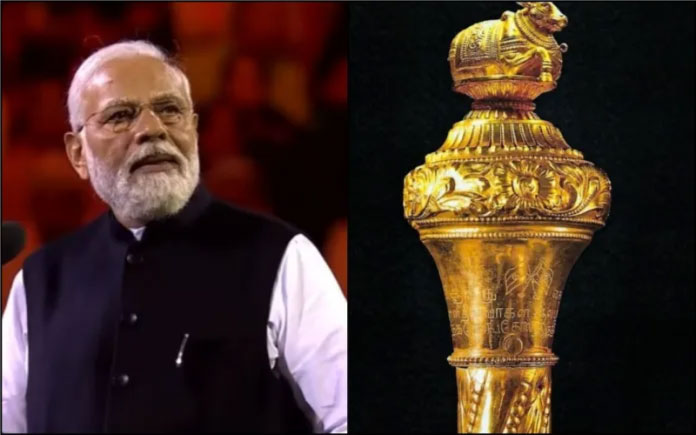

செங்கோல்: அதிகாரம் மற்றும் நீதியின் சின்னம்

Introduction

In a world that often struggles to achieve a delicate balance between power and justice, the concept of Sengol emerges as a beacon of hope. Sengol represents a potent symbol, transcending cultural boundaries and embodying the ideals of strength and righteousness. Whether through its historical significance, cultural interpretations, or contemporary relevance, Sengol stands as a testament to the indomitable human spirit’s pursuit of power and justice.

The roots of Sengol trace back to ancient civilizations where leaders sought to establish their authority and maintain order within their realms. These leaders recognized the importance of wielding power responsibly and fairly, understanding that justice was the key to sustainable governance. The term “Sengol” arose during this era, becoming synonymous with the ability to lead with strength, resolve, and an unwavering commitment to justice.

Historical Significance

Cultural Interpretations

Across different cultures, Sengol has taken on diverse interpretations while retaining its core essence. In some societies, Sengol represents the righteous warrior who courageously defends the weak and upholds justice. In others, it embodies the wise ruler who governs with integrity, using power to protect the rights and well-being of their people. This versatility of interpretation demonstrates the universal human yearning for power and justice in a harmonious coexistence.

Sengol in Modern Context:

In today’s complex and interconnected world, Sengol holds significant relevance. Power imbalances persist on various scales, from international politics to local communities, creating an urgent need for justice to prevail. Sengol serves as a reminder that power alone is not enough; it must be tempered with fairness and compassion to ensure a just society. It inspires individuals, leaders, and institutions to strive for a balanced approach, where power is harnessed responsibly and used as a force for positive change.

The Dangers of Misusing Power:

 While Sengol embodies the potential for transformative leadership, it also highlights the dangers of power when wielded without a sense of justice. History teaches us the tragic consequences of unchecked authority, where despotic rulers and tyrannical regimes have brought immense suffering to humanity. Sengol serves as a cautionary tale, urging us to exercise power judiciously and work tirelessly to establish systems that uphold justice for all.

Personal Empowerment and Social Justice

Sengol extends beyond the realms of political and institutional power. It also encompasses personal empowerment and the pursuit of social justice. Each individual possesses the capacity to wield their own form of Sengol, whether through advocacy, philanthropy, or grassroots activism. By chanelling personal power towards the greater good and striving for justice in our daily lives, we contribute to a more equitable and harmonious world.

Conclusion

Sengol encapsulates the delicate yet profound relationship between power and justice. It stands as a powerful symbol, reminding us of the responsibility that accompanies power and the imperative of pursuing justice in all aspects of our lives. As we navigate the complexities of our modern world, let Sengol serve as a guiding principle, inspiring us to harness our power for the betterment of society and the pursuit of justice for all. Together, we can create a future where power and justice coexist in perfect harmony.

Related Posts

About Vanathi Srinivasan

She is a native of Coimbatore and comes from a farming background. Her initial education was completed at Coimbatore, and she completed her upper education in Covai and Chennai. In 1993, she began her legal career in Chennai High Court.

Let’s Socialize

Newsletter

Subscribe to our newsletter and stay updated to our offers and deals!

We are committed to protecting your privacy

Popular Post

Leave a Reply

Your email address will not be published. Required fields are marked *